OBJECTIVE 01

REDUCE THE CARBON FOOTPRINT

Airport Carbon Accreditation programme certification and Huella Chile

Airport Carbon Accreditation programme certification and Huella Chile

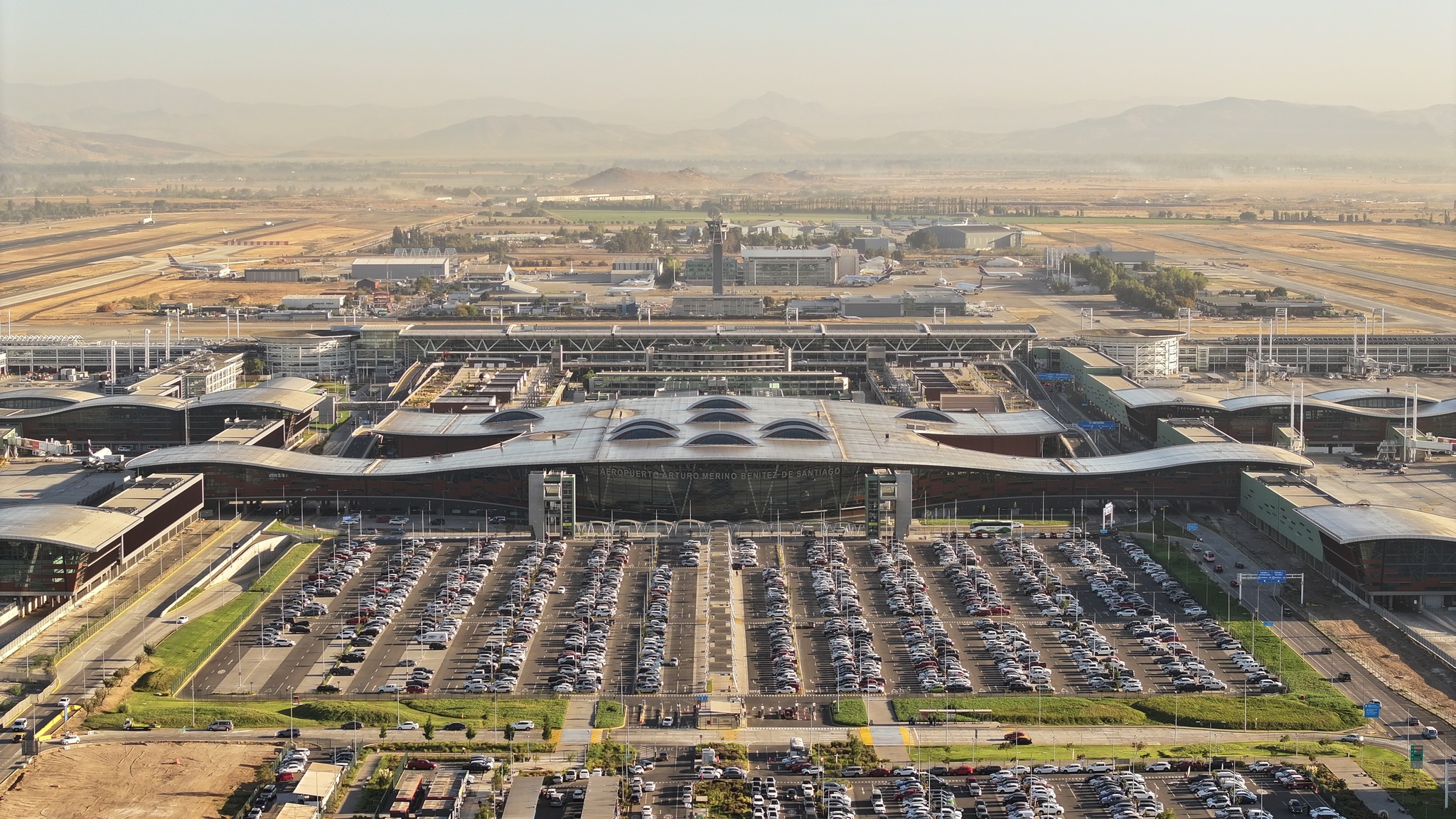
Aeropuerto Santiago de Chile is part of the Airport Carbon Accreditation programme by the Airport Council International and the Huella Chile programme by the Ministry of the Environment. Currently, the airport is certified at Level L3 (optimisation) of the Airport Carbon Accreditation programme, resulting from the implementation of various initiatives that achieved significant reductions in carbon footprint emissions at Terminal T1 and T2 in recent years.

Upcoming challenges

Implement the actions defined in the Stakeholder Engagement Plan submitted to the Airport Carbon Accreditation programme, to maintain Level L3 and advance in additional emissions reduction.

Continue developing initiatives related to the incorporation of renewable energies, the substitution of fossil fuels and energy efficiency, in accordance with the airport's carbon footprint emissions reduction plan.

Solar Photovoltaic Development

Solar Photovoltaic Development

Aeropuerto Santiago de Chile is certified at Level 3 (Optimisation) of the Airport Carbon Accreditation programme by the Airport Council International, which seeks to promote and recognise active efforts by airports to manage and reduce carbon emissions through an institutional certification process.

Upcoming challenges

Based on a study developed to determine the potential for photovoltaic electricity generation at the airport, advance in additional photovoltaic development on existing building rooftops in the short term and develop photovoltaic rooftops on existing car parks in the medium term.

With this phased development, a total electrical power of 11,032 kWp is expected to be achieved, generating around 11.4 GWh per year, equivalent to an approximate carbon footprint reduction of 6,846 tCO₂ per year.

Electromobility Development

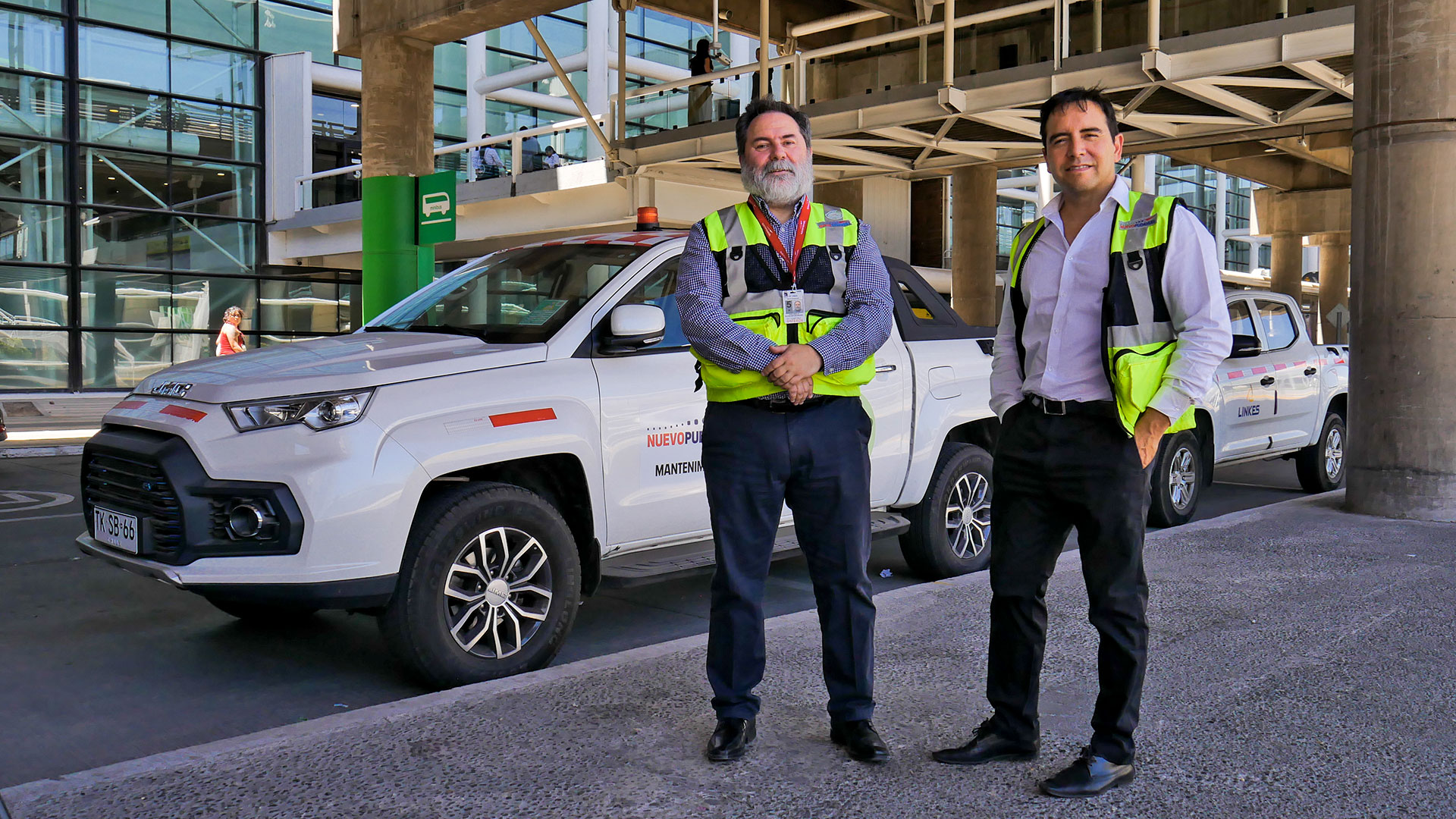
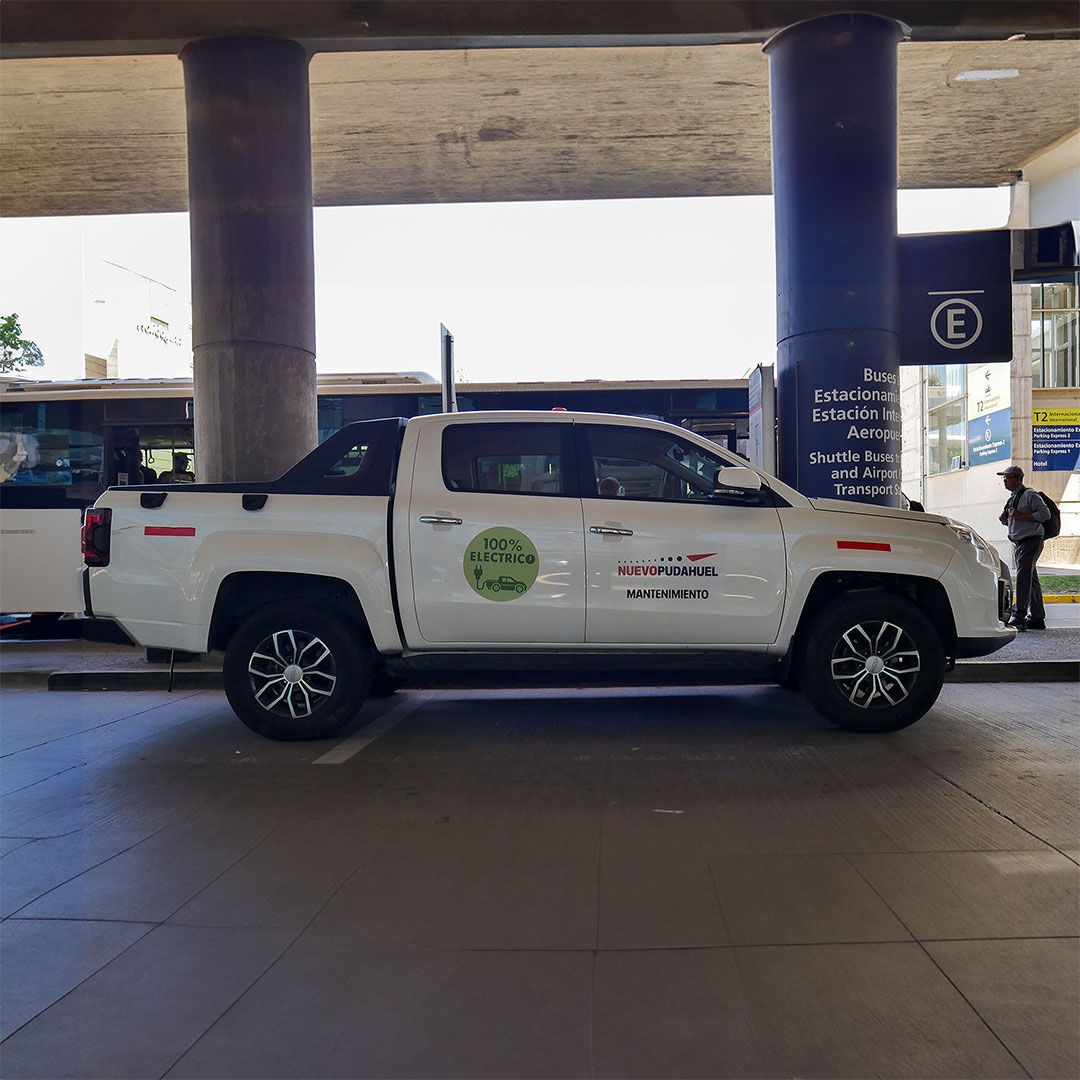
Since 2019, Aeropuerto Santiago de Chile and various companies have advanced in the implementation of electromobility on the land side (car parks and controlled road), including 12 charging points for electric vehicles, operation of 50 electric taxis and 6 electric buses for services connecting the airport with the city of Santiago. Additionally, to support the concession operation, in 2024 6 fully electric vehicles and 8 hybrid vehicles were incorporated, generating fuel savings and an approximate reduction of 74.3 tCO₂ per year.

Upcoming challenges

Among the upcoming challenges to be developed by the airport, the aim is to advance towards the next Airport Council International (ACI) certification level, which seeks emissions neutrality under airport control, and an absolute reduction relative to an established base year of total carbon emissions, including those not controlled by the concession.

Development of Sustainable Aviation Fuels and Green Hydrogen

Based on a study developed to determine the potential for green hydrogen development at the airport, the future implementation of green hydrogen in ground transport vehicles on the land side and air side has been evaluated in the short and medium term, as well as future uses associated with aviation in the long term, complementing support for the future implementation of Sustainable Aviation Fuels (SAF) at the airport.

Upcoming challenges

Aeropuerto Santiago de Chile has been part of the Vuelo Limpio programme of the Chilean Energy Efficiency Agency (ACEE) since 2022, supporting measures for more efficient fuel use and the future implementation of Sustainable Aviation Fuels (SAF) and green hydrogen as part of solutions to reduce the carbon footprint of air transport.

Our Goals

40%

Reduction of Greenhouse Gas (GHG) emissions under operator control relative to the 2019 baseline year

0

Net carbon emissions by 2050